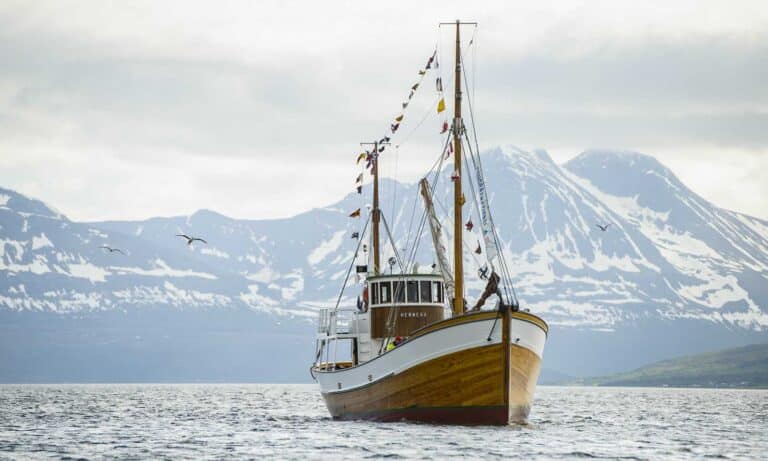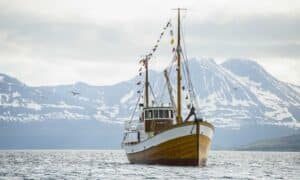


A boat from 1917 does not make a fuss. Hermes II is slow, sits heavily in the water and takes her time getting anywhere. For adults, that is part of the charm. For children it is something better: a boat that moves slowly is a boat you can walk around on.
That is really the whole difference. On board with us, children do not have to sit strapped in and wait for the trip to be over. They can stand up in the bow for a while, go down to the saloon when their fingers get cold, come back up once they have had something warm — and drop by the wheelhouse in between.
They get to steer
This is the part they remember afterwards.
When conditions allow, the skipper brings the children into the wheelhouse and lets them take the wheel. Not as a gimmick — they are given a point on shore to steer towards, and they notice straight away how long a wooden boat takes to answer the helm. It is slow. It is heavier than they expect. And then the boat begins, gradually, to turn where they want it.
For many children it is the first time they have steered something bigger than themselves. We do not make a great performance of it, but we take the time, and we take it seriously.
Safety on board
The short answer: a trip with Hermes II is a calm trip.
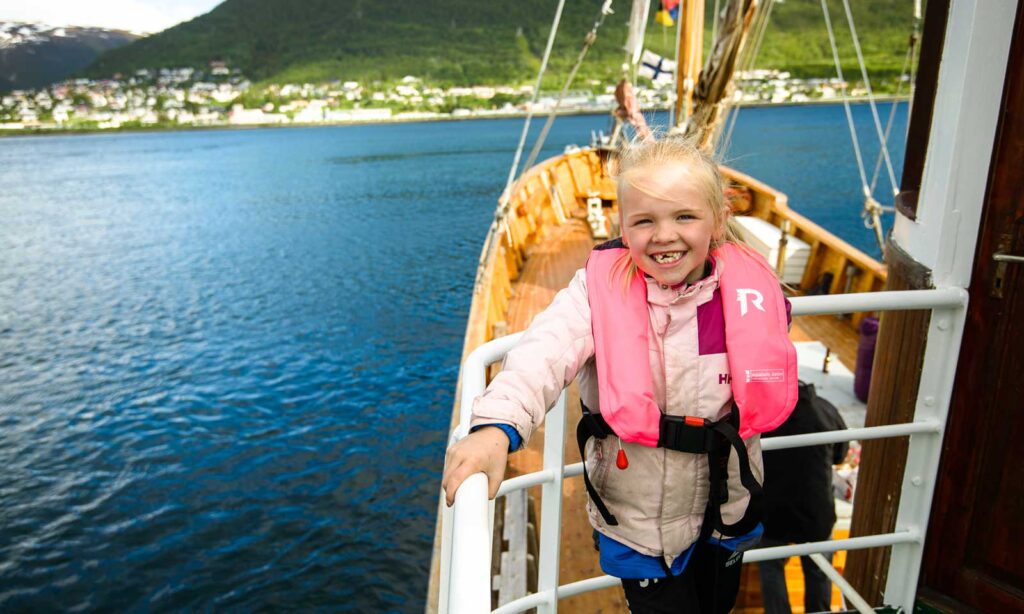
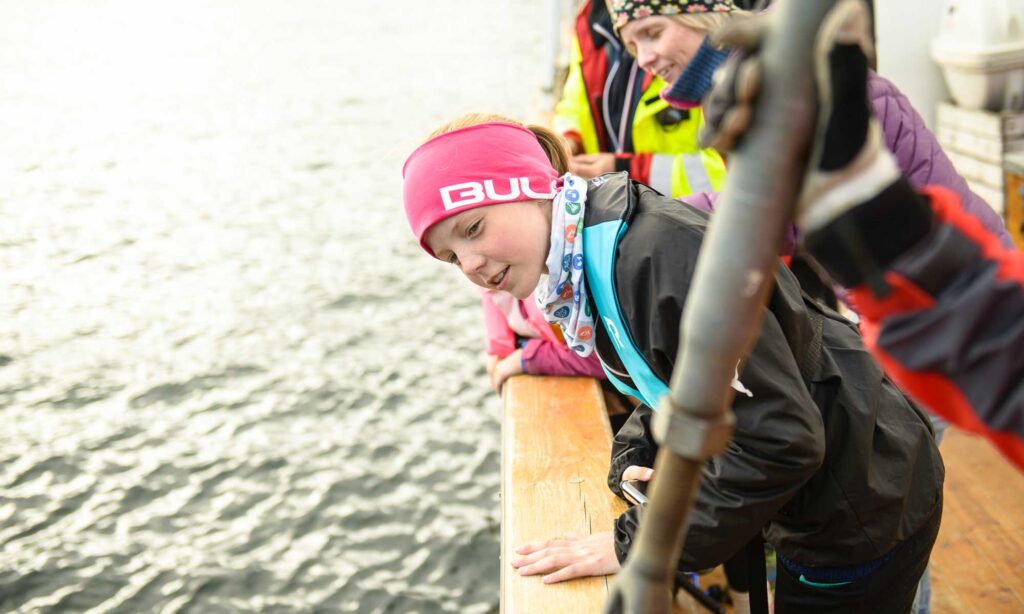
The boat is slow and steady in the water, and the gunwale runs high the whole way round, higher than on most vessels this size.
Children under 10 must wear an inflatable life vest on board. We have vests on board, and the crew will help you find the right size and fit it properly. For adults a vest is not required, but anyone who wants one gets one. Just ask the crew.
We sail the fjords around Tromsø, in waters we know well, and we do not go out when the weather is against us. That last point is worth noting: a slow wooden boat has nothing to gain from pushing through bad weather, so we would rather not.
Warmth, food and what actually saves a trip
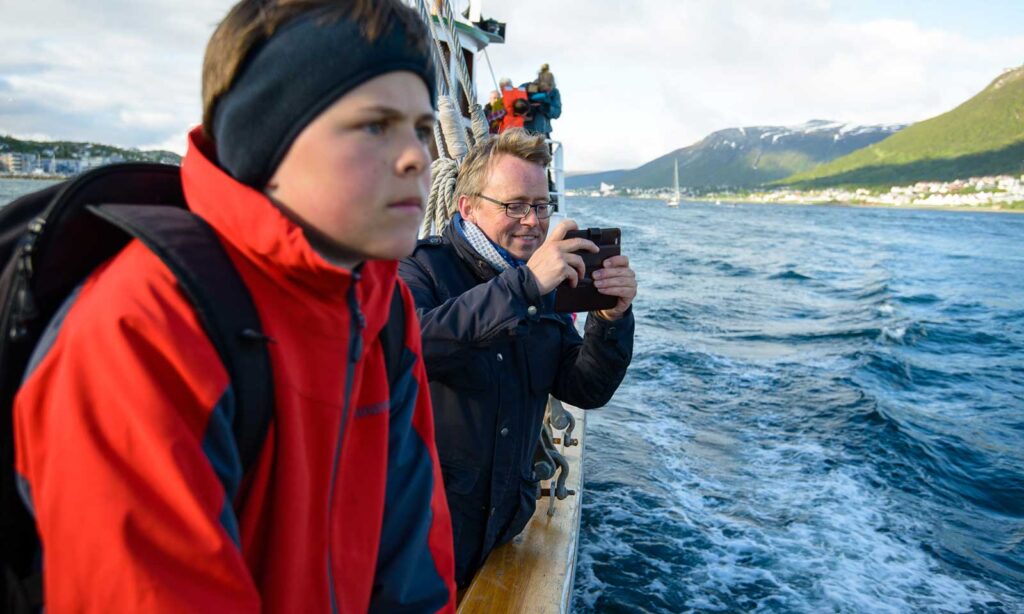
Summer in northern Norway is not always summer. What decides whether a child enjoys being at sea is rarely the view — it is whether they are warm enough.
The saloon below deck is heated, and you can sit and thaw out with something warm in your hands. The view is had from on deck; there are no windows below, so the saloon is where you warm up rather than where you look out. Coffee, tea and blackcurrant toddy are included in the trip, and the toddy is generally the one that disappears fastest among the youngest. Hot chocolate, crisps and chocolate are available to buy on board.
Bring rather more clothing than you think you need. Hat and mittens, even in summer. It is colder at sea than on the quay, and the difference is greater than people expect.
Which trip suits best?
It depends a great deal on their age.
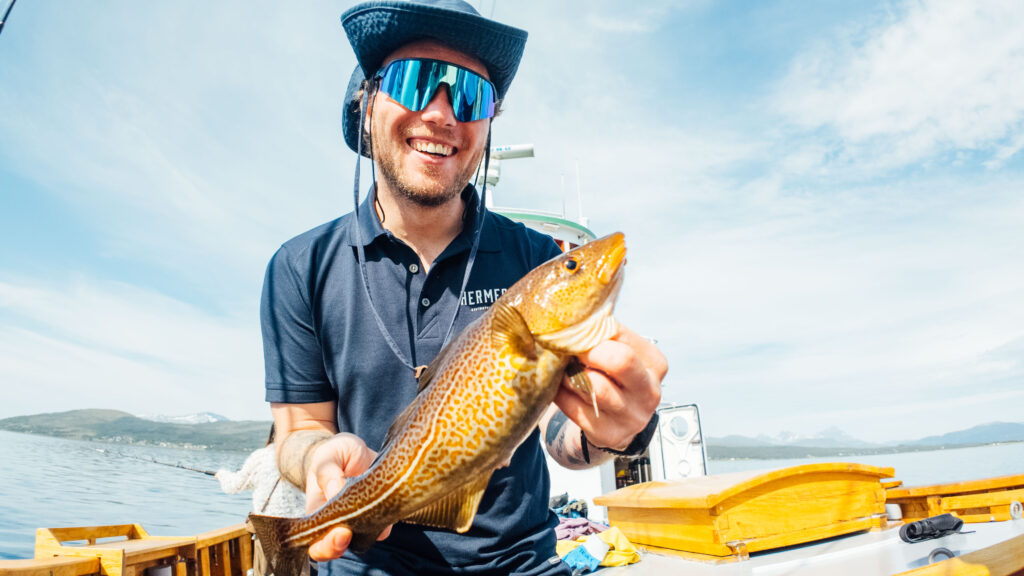
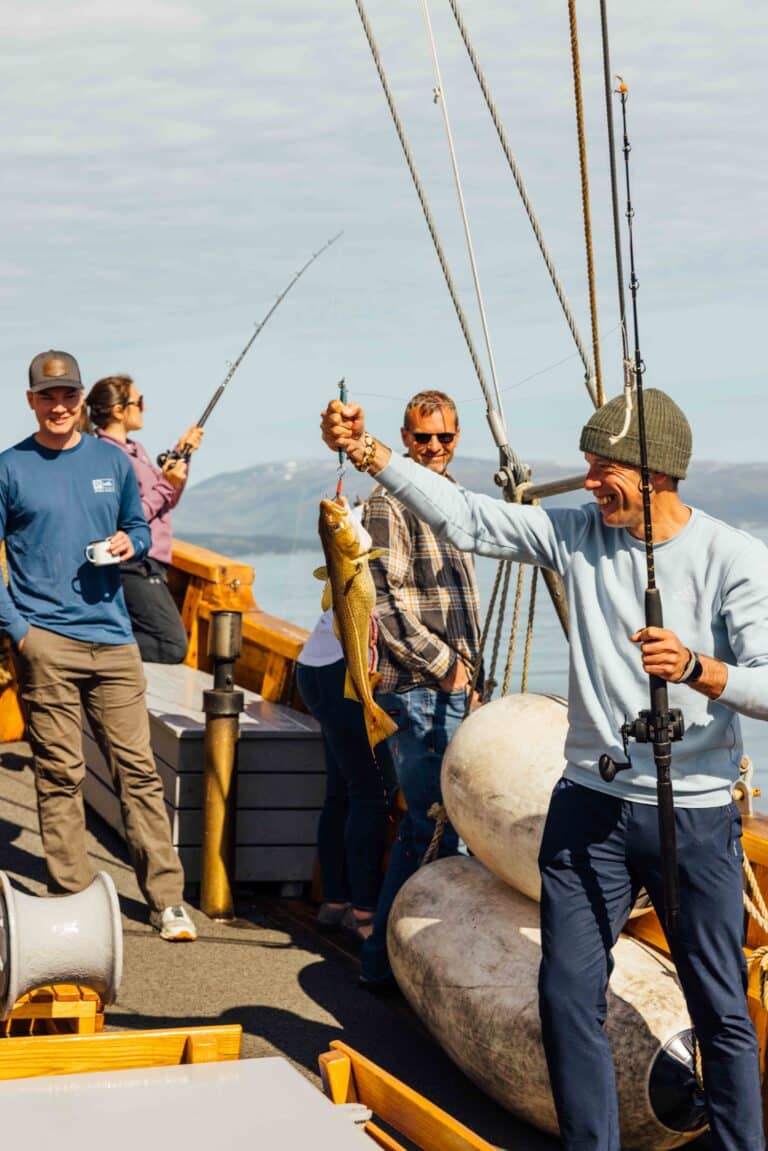
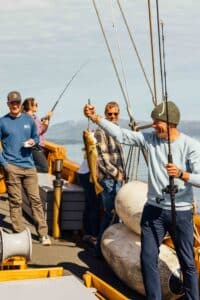
The fishing trip is the firm favourite for children old enough to hold a rod themselves. It is the one we recommend first. It is concrete, they have something to do the whole way, and there is real excitement when something bites. Plenty of adults are surprised at how long a child will stand waiting for something to happen when they are the one holding the line.
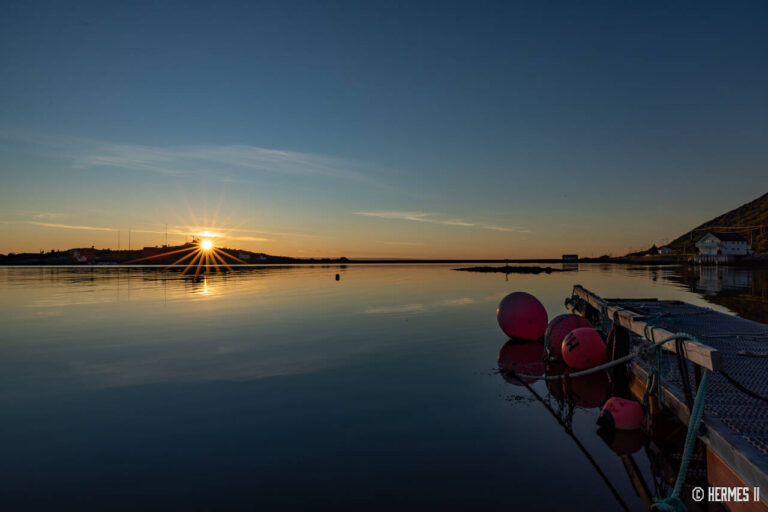
In summer we also run an evening fishing cruise. It is a little shorter, and a good option if you are unsure how long the children will last.
With small children, the one-hour trip on the sound is a good option. An hour is long enough to be an experience, and short enough that it never becomes long.
With slightly older children, the fjord and history cruise also works well. It is longer, but there is enough happening — the landscape changes, there is something to look out for, and there is plenty of time in the wheelhouse.
The RIB trips with Talaria are a different matter. They are fast and bumpy, and suit children over 7 best. If you are unsure, give us a call and we will tell you what we think.
Prices and practical details
Children under 3 travel free. Otherwise children pay half price on most of our trips. Prices are listed on each trip, along with the duration.
If you are bringing a pram, that is no problem — we have somewhere to stow it. Just let us know when you book.
The same goes for anything else we ought to know: allergies, a child who is nervous around water, or something else entirely. It is easier for us to arrange things in advance than to improvise on the day.
Finally
We will not promise that every minute will thrill them. Some fall asleep. Some would rather look at a phone. That is how it goes.
But most of them remember that they steered an old boat through a fjord in northern Norway, that it went slowly, and that it was cold outside and warm within. That is a good thing to take with you.